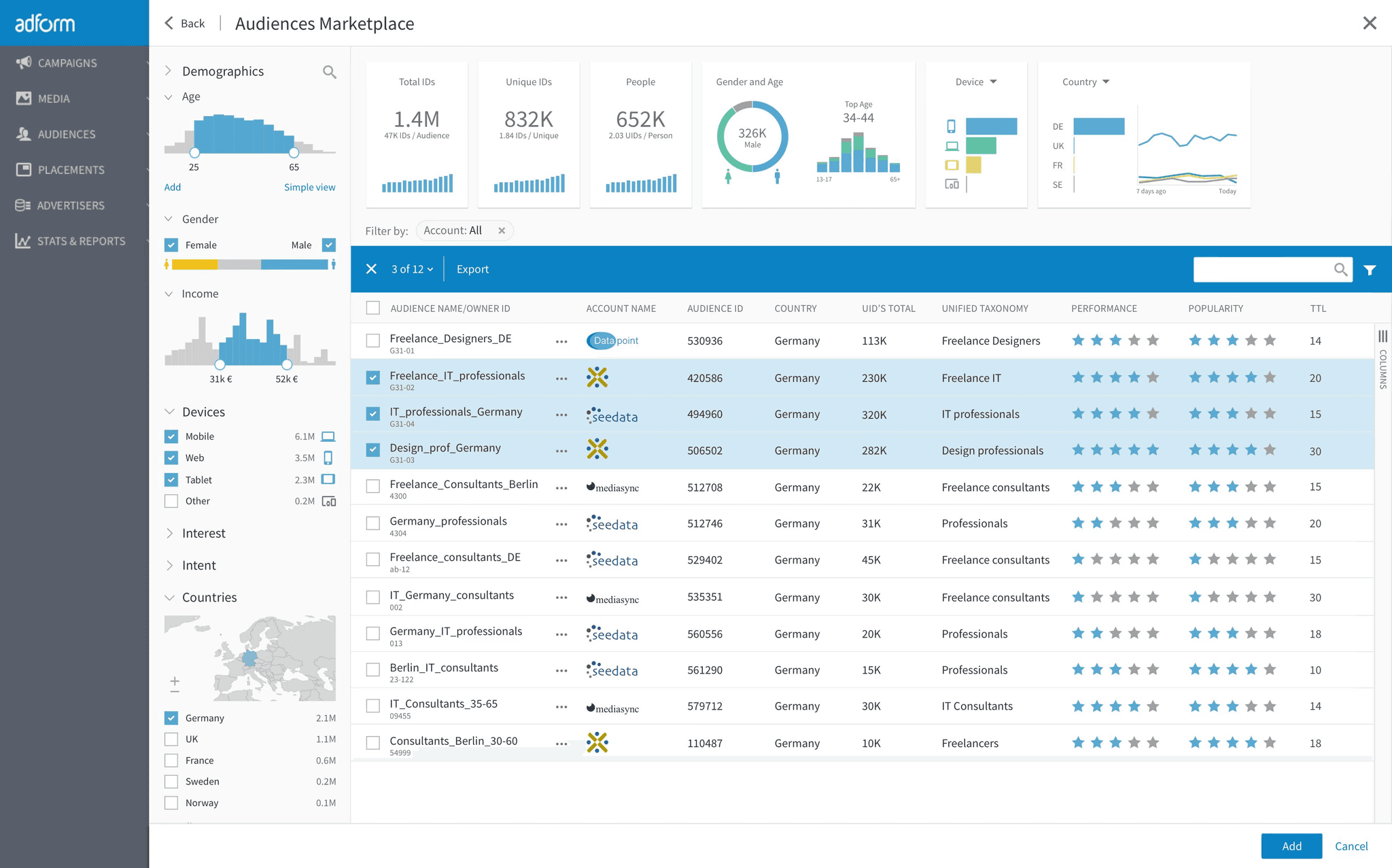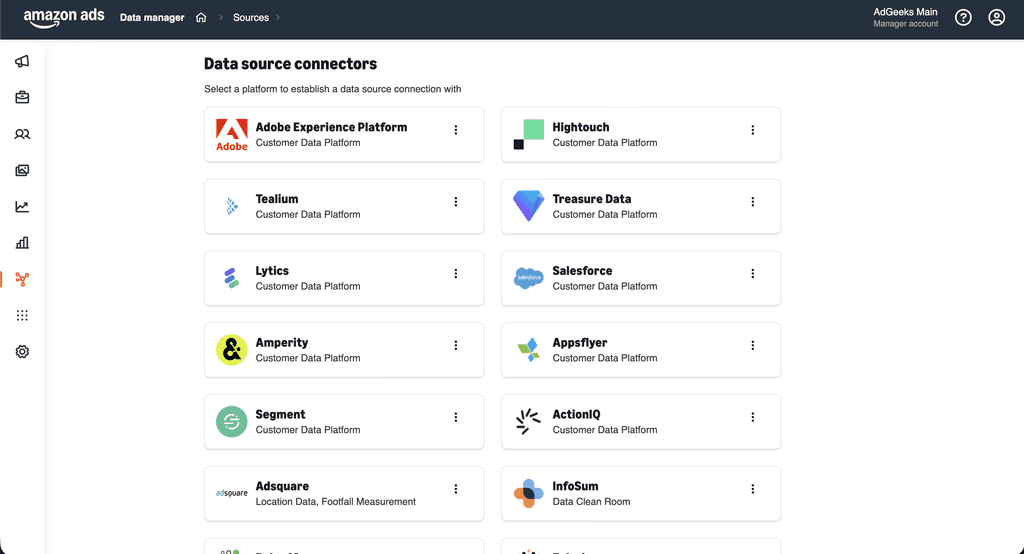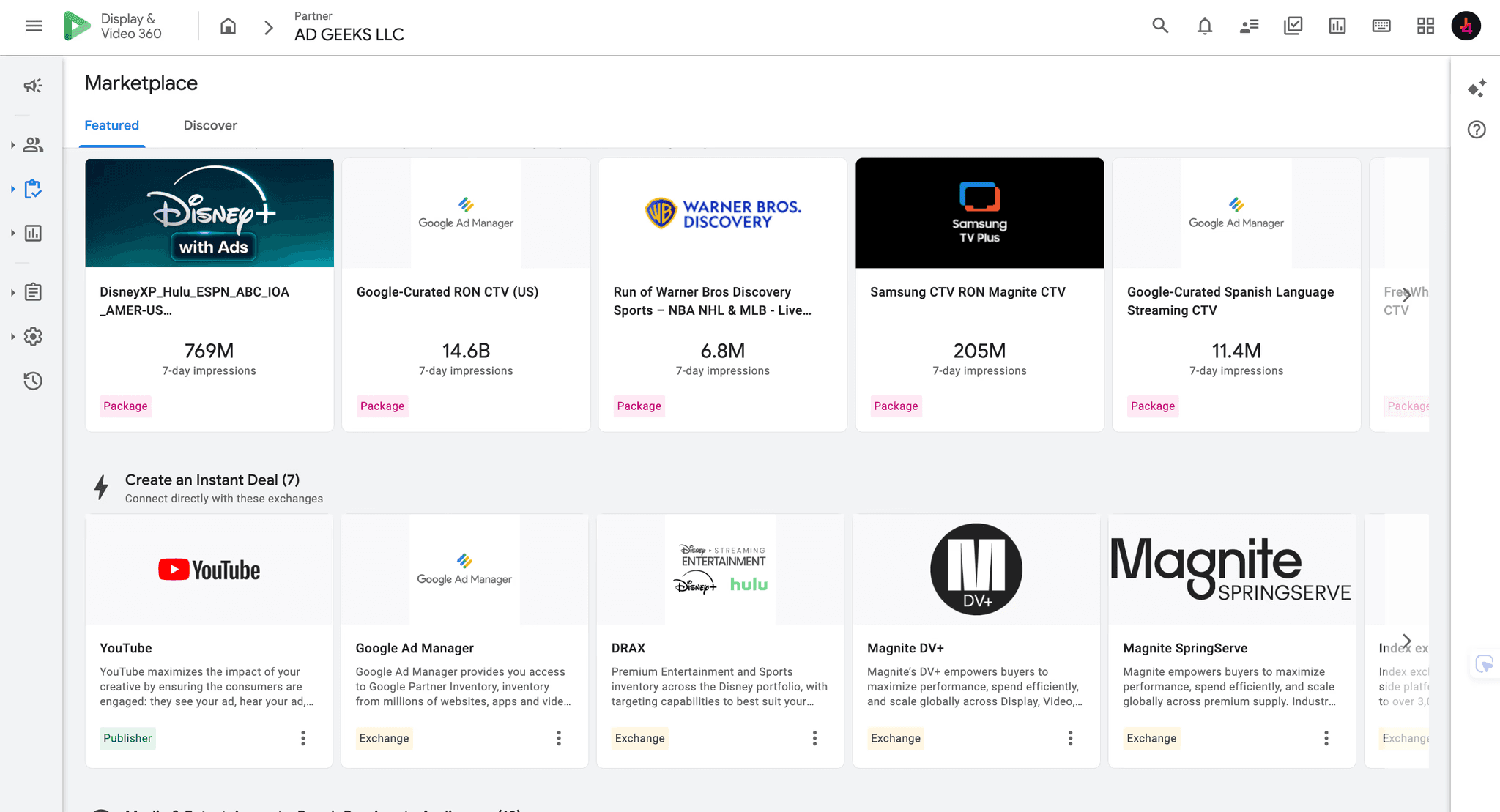
Amazon's audience advantage does not come from a single segment. It comes from the ability to combine shopping, browsing, streaming and entertainment signals with an advertiser's own customer data.
The difficult part is deciding how to use those signals. A broad in-market audience can provide scale but little differentiation. A narrow first-party segment can improve relevance but limit reach. A custom Amazon Marketing Cloud audience can answer a specific question, but only when its logic, lookback window and exclusions are sound.
This guide explains how to build a practical Amazon DSP audience strategy for prospecting, consideration, conversion and retention. It also covers the 2026 transition from the Amazon DSP interface to Amazon Ads Agent and Display, Video, and Audio campaigns, or DVA+.
Quick answer: Start with the business outcome, not the list of available audiences. Use Amazon shopper and in-market signals to find relevant demand, first-party data to identify known customer relationships, and Amazon Marketing Cloud to build custom logic when standard segments are not enough. Test each signal family separately before combining them.
2026 naming update: Amazon DSP is now part of Amazon Ads Agent
Amazon says the programmatic capabilities previously associated with Amazon DSP are now available through Display, Video, and Audio campaigns, or DVA+, with advanced settings managed in Amazon Ads Agent.
The underlying audience strategy remains relevant. Amazon states that existing audience segments, campaign settings and performance history carry over. The same audience signals remain available in the new buying experience.
In this article, “Amazon DSP” refers to the established programmatic buying capability and the term advertisers still commonly use. Depending on the market and account, the interface may appear as Amazon Ads Agent, DVA+ or the legacy Amazon DSP experience.
Current access note: DVA+ with advanced settings is available to a limited group of advertisers in the US. Amazon says advertisers in several other markets that previously used Amazon DSP will continue to see the Amazon DSP experience. Confirm which interface and controls are available in your account before finalizing the campaign design.
The 4 layers of an Amazon audience strategy
A strong plan usually includes 4 audience layers. Each answers a different question.
Audience layer | Question it answers | Primary use |
|---|---|---|
Amazon Audiences | Who shows relevant shopping, browsing, streaming or entertainment patterns? | Prospecting and scale |
In-market audiences | Who appears to be actively considering a category now? | High-intent prospecting |
Advertiser Audiences | Who is already known to the brand? | Retargeting, suppression, retention and CRM-stage messaging |
AMC custom audiences | Which combination of exposure, engagement and advertiser data defines a valuable group? | Advanced segmentation and activation |
Do not combine all 4 layers into one audience at launch. Keep them separate so you can see which signal family improves reach, quality or efficiency.
What Amazon shopper signals can tell you
Amazon describes its audience capability as using billions of proprietary signals to help advertisers reach relevant audiences on Amazon and beyond. Its audience page highlights shopping, browsing and streaming behavior. DVA+ materials also reference purchase, streaming and entertainment insights from more than 300M Amazon customers.
These signals can help identify:
recent category research and consideration;
product and brand affinities;
repeat-purchase patterns;
relationships between categories;
content and streaming interests;
differences between existing and emerging demand.
They cannot predict a person's next action with certainty. Audience membership is a planning and activation signal, not a promise of conversion.
A signal is not proof of intent
An audience signal reflects observed behavior or modeled relevance. It does not prove current intent, guarantee a conversion or demonstrate incrementality. Treat each signal as a hypothesis. Test it in a separate cell and evaluate it against reach, quality and lift.
Use category adjacency carefully
A brand does not have to target only the most obvious category. A travel advertiser might test luggage, travel accessories and destination-content signals. A financial services advertiser might test home-improvement or business-equipment categories when those behaviors support a defined product use case.
Every adjacent category needs a clear hypothesis. Document why the signal should predict demand and define the result that would support or reject the idea.
How to use in-market audiences
In-market audiences are designed to reach people whose recent behavior is consistent with active category consideration. They usually sit closer to a purchase or decision window than broad lifestyle or interest audiences.
Use in-market audiences when:
the product has a clear category and research stage;
the decision cycle is short or medium in length;
the campaign needs efficient prospecting rather than maximum reach;
the creative can address comparison, proof or action directly;
conversion or qualified-lead measurement is available.
Use broader audience types when the brand needs to create demand before people enter an active purchase window. Lifestyle and interest signals can support awareness, education and future consideration.
In-market does not always mean incremental
High-intent audiences may include people who were already likely to convert. This can produce strong attributed results without proving additional sales. Where possible, pair in-market activation with customer suppression, new-to-brand analysis, holdouts or another incrementality method.
Standard audience types and their strategic roles
Exact segment names and availability vary by account, country and campaign type. Use this framework to decide which audience family fits the campaign objective.
Audience type | Best for | Main risk |
|---|---|---|
In-market | Active category consideration and efficient prospecting | Capturing demand that already existed |
Lifestyle | Persistent patterns and broad brand relevance | Wide reach with limited urgency |
Interest | Content or topic affinity | Interest may not translate into purchase intent |
Life stage or life event | Needs linked to a change in a household or business | Timing and regional availability can vary |
Demographic | Reach planning when age or household attributes are relevant and permitted | Overly broad assumptions about customers |
Advertiser first-party | Retention, suppression, CRM stages and modeled expansion | Low match rates or stale source data |
AMC custom | Cross-signal logic and advanced exclusions | Complex logic that is difficult to validate |
Check the live audience catalog before promising a specific segment. Public marketing pages describe Amazon's signal capabilities, but the account interface determines what can be activated today.
First-party data: the control layer
Amazon calls advertiser-owned segments “Advertiser Audiences.” According to Amazon's audience page, advertisers can onboard their own audiences directly into DVA+ campaigns or through Amazon Marketing Cloud. These audiences can support reach extension, remarketing and optimization.
First-party data strengthens audience strategy in 5 ways:
Recognition: Separate known customers from unknown prospects.
Suppression: Stop acquisition media from targeting people who have already completed the desired action.
Sequencing: Adapt the message to CRM stage, product ownership or recency.
Retention: Reach eligible customers with renewal, upgrade or cross-sell campaigns.
Expansion: Use high-value seed groups to support modeled prospecting where available.
First-party data is not automatically high quality. A customer file may contain duplicate profiles, outdated permissions, invalid contact details or people outside the campaign market. Source-data quality matters as much as platform matching.
Build first-party segments from business rules
Useful first-party segments include:
active customers eligible for cross-sell;
high-value customers for retention or insight analysis;
lapsed customers outside a defined purchase cycle;
qualified leads that have not converted;
recent purchasers who should be excluded from acquisition;
customers who own product A but not product B;
members approaching renewal;
unengaged prospects to exclude from higher-cost media.
Give every segment an owner, refresh schedule, inclusion rule and exclusion rule. “CRM audience” is a label, not a strategy.
First-party data quality gate: match, consent, expiry and suppression QA
An uploaded audience is not necessarily a usable audience. For every refresh, record the source population, number of eligible records, accepted identifiers, onboarded records, and matched or addressable audience size. Investigate any material change from the previous refresh before activation.
Match quality
Check data normalization, duplicates, invalid identifiers, geography and CRM-stage logic. A low match rate does not always indicate a platform problem, but an unexplained change should block launch until it is understood.
Consent and purpose
Confirm the permitted advertising purpose, market, consent or other required legal basis, opt-outs, and any prohibited or sensitive categories. The advertiser's data owner should approve the audience before onboarding.
Expiry and refresh
Set audience membership to expire in line with the buying cycle and the permission attached to the source data. Requalify records during each refresh instead of allowing stale customers to remain indefinitely. Document the source-system refresh, platform refresh and deletion schedule separately.
Suppression QA
Reconcile the source, onboarded and published audience counts. Test inclusion and exclusion logic. Confirm that the negative audience is attached to every acquisition line and that recent converters stop receiving acquisition media. Keep a dated screenshot or change log.
Ownership should also be explicit. The CRM or data owner is responsible for source accuracy. Ad operations is responsible for platform attachment. Analytics is responsible for checking post-launch leakage.
How Amazon Marketing Cloud changes audience design
Amazon Marketing Cloud is a privacy-safe clean room that lets advertisers analyze and build audiences using pseudonymized Amazon Ads signals and their own inputs. Amazon says AMC can combine signals from Amazon properties, advertiser inputs and onboarded third-party providers.
AMC can build custom audiences from engagement records, conversion events and segment data. Eligible audiences can then be activated across supported sponsored ads, video and display campaigns.
When to use AMC audiences
Start with standard Amazon Audiences when they answer the brief. Use AMC when the campaign needs more precise logic, such as:
people exposed to streaming TV but not display;
people who saw 2 or more ads but did not convert;
customers who purchased in one category but not a related category;
high-value customers with recent ad engagement;
existing customers who should be excluded from acquisition;
prospects whose exposure sequence suggests the need for a different creative message;
custom recency and frequency windows unavailable in standard segments.
Amazon recommends reviewing standard audience options first, then using AMC for more advanced cross-source, cross-media or bespoke use cases. AMC applies privacy thresholds and returns aggregated, anonymous outputs. It accepts pseudonymized advertiser inputs, not raw personal information.
A full-funnel audience map
Funnel stage | Audience role | Suggested signal | Primary KPI |
|---|---|---|---|
Awareness | Create qualified reach | Lifestyle, interest, streaming affinity and broad category signals | Incremental reach, frequency, completed views and brand lift |
Consideration | Reach active researchers | In-market and category-adjacent shopper signals | Site visits, engaged visits, product views and qualified traffic |
Conversion | Focus on valuable actions | High-intent audiences, CRM stages, retargeting and custom AMC audiences | Purchases, leads, subscriptions, CPA and ROAS |
Retention | Protect and expand customer value | Active, lapsed, renewal and product-ownership segments | Repeat purchase, renewal, upgrade and lifetime value |
Do not ask one audience to do every job. A broad streaming-affinity audience should not be judged against the same short-term CPA target as a qualified-lead retargeting segment.
Example audience architecture: prospecting, suppression, retargeting and control
Use this operating template as a starting point. Adapt recency and refresh rules to the category, buying cycle and available platform controls.
1. Prospecting cell
Audience: One Amazon shopper or in-market hypothesis. Exclude known customers, recent converters and the active retargeting pool. Refresh and QA: Review reachable audience size weekly and revalidate the signal hypothesis monthly. Owner: Media strategist.
2. Suppression layer
Audience: Eligible customers, recent converters and approved opt-out exclusions from first-party systems. Apply the segment as a negative audience to every acquisition line. Refresh and QA: Refresh daily when the data pipeline allows. Otherwise, refresh before launch and according to a documented service schedule. Owner: The CRM or data owner approves the source. Ad operations verifies attachment and delivery.
3. Retargeting cell
Audience: Qualified site or app activity and eligible non-converting engagers. Exclude current customers and recent converters. Refresh and QA: Refresh events continuously or daily. Align audience membership expiry with the buying cycle. Owner: Performance lead, with support from analytics.
4. Control cell
Audience: A broader eligible audience, contextual strategy or holdout that can show whether narrow signal targeting adds value. Keep market, format, creative and measurement as consistent as possible. Refresh and QA: Do not change the control definition during the test. Check contamination and reach weekly. Owner: Measurement lead.
Define conflicts before launch. When one person qualifies for multiple cells, document which cell takes priority.
Overlap, suppression and exclusions
Audience overlap can make 3 line items appear different even when they reach many of the same people. This creates internal competition and weakens the comparison.
Before launch:
exclude recent converters from acquisition;
separate existing customers from net-new prospects;
set a priority order for people who belong to multiple CRM stages;
create mutually exclusive test cells when platform controls and audience size allow;
review audience reach after exclusions;
document which segment takes priority when rules conflict.
Suppression is often more valuable than another targeting layer. It protects budget, reduces repetitive messaging and makes new-customer reporting more credible.
Match the creative to the signal
Relevant targeting cannot compensate for generic creative. Use the signal to choose the message, but do not make unsupported personal claims.
Signal | Creative job | Example angle |
|---|---|---|
Broad lifestyle or interest | Create category relevance | Problem, benefit and brand introduction |
In-market | Reduce decision friction | Proof, comparison, offer or product detail |
Known lead | Move the person to the next stage | Demo, consultation, application or reminder |
Existing customer | Build value | Upgrade, renewal or complementary product |
Lapsed customer | Re-establish relevance | What's new, refreshed offer or return message |
Avoid copy that reveals or implies sensitive personal knowledge. Audience signals should improve relevance without drawing attention to the targeting itself.
Audience strategy for non-endemic brands
Brands do not need to sell products on Amazon to use its programmatic audience signals. Amazon says DVA+ supports advertisers with goals beyond Amazon, including leads, subscriptions and site visits. An Amazon retail presence is not required.[2]
For travel, automotive, finance, insurance, education and telecom brands, shopper signals can indicate category interest or relevant purchase context. The final conversion can still take place on the advertiser's website, app or sales platform.
Read the Amazon DSP guide for non-endemic brands for campaign architecture, link-out journeys and off-Amazon measurement.
Scope boundary: this page covers audience design
This article is the audience-design pillar. It covers definitions, eligibility rules, overlap, exclusions, refresh cadence and ownership. The non-endemic guide covers vertical use cases, link-out journeys and off-Amazon conversion patterns. The 2027 campaign strategy guide covers orchestration, sequencing and budget roles across display, video and CTV.
Use internal links to connect these topics instead of repeating the same material on every page.
Measurement: prove the audience, not just the media
Audience reporting should answer 4 separate questions:
Scale: Did the audience provide enough unique reach?
Efficiency: Did it improve the cost per qualified outcome?
Quality: Did it generate valuable customers, not just more events?
Incrementality: Did it create outcomes beyond what would have happened anyway?
Track reach, frequency, conversions, value, and new-to-brand or new-customer outcomes where available. Use AMC to analyze cross-media paths, overlap, frequency and custom conversions. Use controlled tests or holdouts when the question is causal.
For implementation details, see the Amazon DSP measurement with Amazon Marketing Cloud guide, which covers overlap, frequency, paths and custom-audience analysis.
Do not compare 2 audiences only by click-through rate. Amazon programmatic inventory includes streaming TV, online video, display and audio. Each format creates a different response path.
Common audience strategy mistakes
Starting with too many segments
Spreading a small budget across too many audiences leads to weak delivery and inconclusive results. Start with a few distinct hypotheses.
Calling every shopper signal high intent
Browsing, entertainment and purchase signals mean different things. Name the behavior the strategy is actually using.
Skipping customer suppression
Existing customers can inflate attributed performance in an acquisition campaign. Suppress them when the business objective is net-new growth.
Using stale first-party data
An outdated lapsed-customer list may include recent buyers, opt-outs or people outside the campaign market.
Combining audiences before learning
A large OR-combined audience may deliver, but it will not show which signal created value. Test the signals separately first.
Ignoring overlap
Multiple segments may reach the same person. Without exclusions or overlap analysis, line-item comparisons can be misleading.
Optimizing only for attributed conversions
Strong attributed performance can come from people who were already close to purchase. Add new-customer, lift or holdout analysis where possible.
A practical audience planning checklist
Define 1 business outcome for the campaign.
Identify the customer stage the media should influence.
Write a hypothesis for each audience cell.
Confirm live segment availability in the account and market.
Separate Amazon Audiences, in-market audiences and advertiser-owned data at launch.
Set customer and converter exclusions.
Document lookback windows and refresh schedules.
Confirm privacy, consent and data-onboarding requirements.
Match the creative to each audience's decision stage.
Set reach, frequency and outcome KPIs by format.
Plan overlap and incrementality analysis.
Decide which result will trigger a scale, revision or pause decision.
Questions to ask an Amazon DSP partner
Which audience controls are available in our current interface?
Which standard Amazon Audiences fit the business hypothesis?
Can we test in-market, lifestyle and first-party audiences separately?
How will advertiser data be onboarded, matched and refreshed?
Which fields or sensitive categories are prohibited?
How will customers and recent converters be suppressed?
Can the team measure overlap and unique reach?
When would AMC add value beyond standard segments?
Who writes, validates and maintains the AMC audience logic?
How will performance be compared across streaming TV, video and display?
Which test can distinguish attribution from incrementality?
How often will the audience strategy be reviewed?
Use the Amazon DSP partner access checklist to evaluate permissions, service scope, reporting and account ownership. Use the Amazon DSP budget guide to align audience testing with realistic spend.
Before scaling a winning cell, run the Amazon DSP campaign audit checklist to verify the audience, suppression, pacing and measurement controls.
Frequently asked questions
What are Amazon shopper signals?
Amazon shopper signals are derived from activity across Amazon's properties and services, including shopping, browsing, purchase, streaming and entertainment interactions. Amazon uses these signals to support audience insights and media activation.
What is an Amazon in-market audience?
An Amazon in-market audience is built around recent signals consistent with active category consideration. Check the live account for exact segment definitions, recency and availability.
Can Amazon DSP use first-party data?
Yes. Amazon describes Advertiser Audiences as a way to onboard advertiser-owned audiences directly into DVA+ or through Amazon Marketing Cloud, subject to access, privacy, consent and onboarding requirements.
What is the difference between Amazon Audiences and Advertiser Audiences?
Lorem Ipsum is simply dummy text of the printing and typesetting industry.
What is Lorem Ipsum? What is Lorem Ipsum?
Amazon Audiences use Amazon's proprietary signals. Advertiser Audiences use data supplied or controlled by the advertiser. A campaign can use both, but their roles, refresh rules and exclusions should be defined separately.
When should advertisers use AMC audiences?
Use AMC when standard segments cannot support the required combination of exposure, engagement, conversion and advertiser-owned signals. Start with standard options when the use case is simple.
Do brands need to sell on Amazon?
No. Amazon says DVA+ can support off-Amazon goals such as leads, subscriptions and site visits. An Amazon retail presence is not required.
Are high-intent audiences always better?
No. They may improve attributed efficiency but provide less incremental reach. The right choice depends on the campaign stage, conversion cycle and measurement plan.
Final takeaway
An Amazon DSP audience strategy works best when each signal has a clear job. Shopper and in-market signals help find relevant demand. First-party data identifies existing customer relationships. AMC adds custom logic when standard segments are not enough.
Keep the first test simple. Apply exclusions, match the creative to the customer stage, and measure audience quality as well as attributed volume. Scale the audiences that create new business value, not just those that collect the easiest conversions.